Peerless is level 1 of 4 in the Nigeria Hall of Fame: changed the field itself. Tell the country's story without them and the story breaks. See how the levels work.
Why they are here
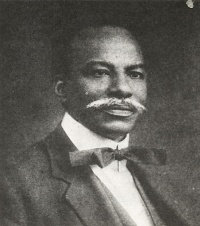
Surveyor, engineer, journalist and musician, and the man widely credited with founding Nigerian nationalism. Everything that followed had to start somewhere, and it started with him.
Olayinka Herbert Samuel Heelas Badmus Macaulay was born in Lagos, a grandson of Bishop Samuel Ajayi Crowther, and trained in Plymouth as a civil engineer and surveyor before returning to work for the colonial public works department.
He left government service and turned his skills on the government instead. He took the chiefs' case over land seizure in Lagos to the Privy Council in London in 1921 and won, establishing that the colonial state did not simply own the land it occupied — a judgment that made him famous across West Africa. He founded the Lagos Daily News, one of the first Nigerian-owned newspapers, and in 1923 the Nigerian National Democratic Party, the first political party in the country's history, which then won every Lagos seat in the elections of 1923, 1928 and 1933.
He was jailed twice by the colonial authorities. In 1944 he became the first president of the National Council of Nigeria and the Cameroons, with Nnamdi Azikiwe as its secretary, and he died in 1946 while touring the country to raise funds for it. Azikiwe, Awolowo and the independence generation all built on ground he had cleared. His face was on the one naira note.
He left government service and turned his skills on the government instead. He took the chiefs' case over land seizure in Lagos to the Privy Council in London in 1921 and won, establishing that the colonial state did not simply own the land it occupied — a judgment that made him famous across West Africa. He founded the Lagos Daily News, one of the first Nigerian-owned newspapers, and in 1923 the Nigerian National Democratic Party, the first political party in the country's history, which then won every Lagos seat in the elections of 1923, 1928 and 1933.
He was jailed twice by the colonial authorities. In 1944 he became the first president of the National Council of Nigeria and the Cameroons, with Nnamdi Azikiwe as its secretary, and he died in 1946 while touring the country to raise funds for it. Azikiwe, Awolowo and the independence generation all built on ground he had cleared. His face was on the one naira note.
Spotted something wrong? Tell us and we will check it.